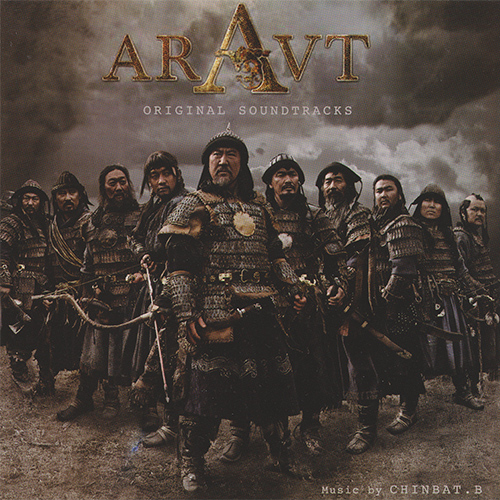
On any post, if the link is no longer good, leave a comment if you want the music re-uploaded. As long as I still have the file, or the record, cd, or cassette to re-rip, I will gladly accommodate in a timely manner all such requests.

Slinging tuneage like some fried or otherwise soused short-order cook. Embiggening the earholes

From Buttholes to Europop, from Loons to Bassoons.

20 August 2013

South Korea


Korean guitarist Shin Jung Hyun is considered to be the "Godfather of Rock" in Korea.  During his lengthy career that began in the 60s, he has had many bands & performed solo as well. He is still rocking today at the age of 75.


I have quite a bit of Shin’s music, but much of it is available from Light in the Attic as re-issues, if you’re interested. So I’m posting up In-A-Kadda-Da-Vida. It was recorded live & has between-song banter & audience noise, but this is a great "psych-rock" gem. Also the second Shin Jung Hyun & Yup Jeuns’ album from 1975 which features the earliest version of the Shin standard “Beautiful Rivers & Mountains”. Vol. 2 was re-released in 1994 but it seems to be OOP.

Questions members are: Bass: Lee Tae Hyun  ; Shin Jung Hyun - guitar ; Kim Min Rang - keyboards; Lee Tae Hyun – bass; & Kim Dae Hwan – drums.

Shin Jung Yung & Questions – In-A-Kadda-Da-Vida, Universal Record Co. KLH-24, 1970. 
decryption code in comments

Side 1 –

You are In
Gimsangsa Back from Vietnam
To Leave Him
Funky Broadway

Side 2 –

In-A-Kadda-Da-Vida


Yup Jeuns are: Shin Jung Hyun - guitar & vocal; Lee Nam Lee – bass; Kim Ho Sik –drums.

decryption code in comments

Tracklist –

아름다운 강산
산아 강아
지키자
어깨 나란히
비둘기
승리의 휘파람
뭉치자
나

Enjoy,
NØ

19 August 2013

North Korea


I’ve just been having too much fun in Mongolia. I’ve got to go somewhere where fun is prohibited. I need to get my serious on, seriously. Now, North Korea will be just the place for Ø freedom. Here’s some schmaltzy synth-pop, revolutionary rock, cheeky child rap, & a healthy dose of hagiography for Dear Dead Daddy  Kim Jong-il. This is the old NEW sound of North Korea. With a heady mix of Stalin opera, Tokyo karaoke, & brooding impressionism, the sound of 05 P'yŏngyang somehow comes out of the speakers as warped agit-pop or lost-in-time commie funk.


If you've ever wondered what goes on in North Korean music, this is your vehicle for exploration. Christiaan Virant visited this strange mysterious land. He assembled this amazing audio collage. Presented here are rare live recordings from various performances & mass games demonstrations, sounds lifted from People's Army television dramas, samples from hard-to-find CD releases obtained in the capital, & news reports from the real Radio P'yŏngyang, which continues to broadcast to this day , now under the new, strikingly anodyne moniker ‘The Voice of Korea’.

Sublime Frequencies SF023, 2005.
decryption code in comments

Tracklist -

Motherland Megamix
New Model Army
Numbers Game
Pride of the Nation
Start 'em Young
Arirang
Commie Funk
Motherland Redux – artists unknown

You are forbidden to Enjoy,
NØ

This is by way of special request from spiffy, who left a comment wanting more great DPRK music.


The new official North Korean tune posted online entitled something like “Let’s Defend General Kim Jong Un at the Cost of Our Lives” or “We Will Safeguard General Kim Jong Un With Our Very Lives,” depending on the translation.
It has everything we love from North Korean propaganda music video: shots of Mount Baekdu, images of the military, marching band instrumentation, & a Soviet-style chorus of shouting male tenors.


& here’s a little ditty called “Let’s Study” from The Moranbong Music Band, a pop music group of five North Korean women who were hand-selected by the country's communist leader, Kim Jong Un.

18 August 2013

Mongolia, Part 1

Re-Upped 10/24/2025.  Thanks to Anonymous 
Now direct links, no passwords.


Damn, this is taking longer than  I thought. Think I'll post up part 1.


The Mongolian people love music. It’s something that I share with them & maybe it’s why I am enjoying their music so much.


I have tried to break the styles up into various groupings. The ones I like best are the folk rock, which combines Mongolian traditional instruments & music with more modern sounds. My favorite of these is Altan Urag.


The other favorite of mine is the Shamanic music. Rarely heard in the west, it predates lamaist or Buddhist music. Its chants go directly to the heart of magick.


There is music from Altai, in the west of Mongolia.


There is ethno jazz.


End of Part 1 - 
Enjoy,
NØ

15 August 2013

Tuva


I;m gonna have to make this quick. I'm supposed to be doing Tuva today. Well, Tuva (Тува́) or the Tyva Republic (Респу́блика Тыва́) is really not an independent country, but a federal subject of Russia (a republic or state). It lies in the geographical center of Asia, in southern Siberia. The Republic shares borders with the Altai Republic, the Republic of Khakassia, Krasnoyarsk Krai, Irkutsk Oblast, and the Republic of Buryatia in Russia & with Mongolia to the south. Its State capital is the city of Kyzyl. I wanted to present the unique throat singing or overtone singing that is prevalent in Tuva. After I looked around I realized that there is a great deal of current interest in all things deep throated, so most of the music is readily available. I'm going to post a few things as example & then move on.


The real story is Mongolia. I wasn't having any luck finding anything worthwhile for Mongolia & I'd been relatively successful in my journey so far so I reached out to some of my music maven friends for help. Well my friend Waldo sent me some Mongolian music…nearly 20 Gigabytes worth…yes, that's right, as Glenn Quagmire says, "Giggity- giggity-giggity" Gigabytes. After sorting through the redundancy & junk, there are still about 15 GB. I'm listening to it as fast as I can & this is some righteous shit. So all I can say is, in the next few days, look out…here it comes.


*****************************************************************


For now, check these out. Yat-Kha is a band from Tuva, led by Albert Kuvezin. Albert Kuvezin (Альберт Кувезин) is a Tuvan guitarist & throat singer. He was one of the founding members of the Tuvan folk ensemble Huun-Huur-Tu. Huun-Huur-Tu is probably the band responsible for the current interest in Tuvan music. Kuvezin is the leader of the Tuvan folk/rock/electro/post punk band Yat-Kha.


Here is their version of  “In-A-Gada-Da-Vida”. You're gonna love this.  
(decryption code in comments)


& here's an album of Tuvan Throat Singing in the horekteer style so as not to leave you high & dry.
 

Various – Tuvan Throat Singing Virtuosos, Unesco Z. K. Kyrgys, 2002.
decryption code in comments 


Enjoy & prepare for the Mongol Horde,
NØ

Free Tibet


I'm not going into the whole history of China's annexation of Tibet, but before the Chinese occupation in 1949, Tibet was comprised of three provinces known as U-Tsang, Amdo, & Kham. When the Chinese refer to Tibet they mean the Tibetan Autonomous Region (T.A.R.) which was established in 1965. This area comprises all of what Tibetans call U-Tsang & parts of Kham. The traditional Tibetan areas of Amdo & the remainder of Kham were incorporated into the Chinese Provinces of Sichuan, Gansu, Qinghai, & Yunnan. Within these Chinese Provinces there are Tibetan areas divided into various Prefectures subdivided into Counties or district level administrative areas.


As recently as August 6, an important religious festival in Tibet was invaded by a host of unwelcome visitors: China’s Paramilitary Armed Police. As festival goers & religious dignitaries gathered at a sacred location near Lhasa they were stopped & submitted to body searches by a solid perimeter of armed security forces.

The Shoton festival can be traced back to the 15th century. It unites Tibetan lay-people & religious communities in celebration of the passing of the summer retreat, where monks seek solitude to avoid accidentally stepping on summer insects. It also signals the beginning of the milking season. In the past the festivities has drawn dancers from all over Tibet, but this year the only performance allowed is from the Chinese state-approved Lhasa Singing & Dancing Troupe.


This harassment is just part of a continuing campaign against freedom in Tibet & against music & musicians in particular. Last month a popular singer in eastern Tibet, Kalsang Yarphel, was arrested. He is still in detention, apparently because his songs celebrating Tibetan identity & language offended Chinese authorities. The father of three had already been interrogated several times following his appearances at concerts promoting the Tibetan language. One particular song “Tibetans” seems to have been deemed too political by authorities:
“Tibetans, we learn Tibetan, speak Tibetan, it is our duty to do so
Tibetans, we unite, unite all three areas of Tibet together
Tibetans, we being brave, being brave reminding ourselves 
that years are mixtures of happiness and sorrow
Tibetans, we express our joy and woe, 
thinking of the future of Tibet, we chase our dreams
Tibetans, we hold national pride, march forward proudly shoulder to shoulder
Tibetans, we work hard, 
we are the future inheritance of Tibet's new generation”

The detention of Kalsang Yarphel follows the conviction & sentencing of three other singers this year. Pema Tinley & Chakdor were sentenced to two years in prison in February following the release of their album The Pain of an Unhealed Wound.


The same month, Lolo was sentenced to six years, apparently as a result of his patriotic songs. His crime was recording an album of 14 songs that called for Tibet's independence, unity of the Tibetan people, & the return of the Dalai Lama. He had no known links to protests or other activism.


Various – Songs of Tibet, World of Music Records, 2000.
decryption code in comments

Tracklist –

Auspicious Verses of the Secret Aja Griva
The Practice of Chöd
Kui. Kyon. Pan (The Praise to Tara)
Ganden la Ghiema (Prayer to Lama Tzong Khapa)
Djam Mon (The Prayer of Universal Love)
Tamdrim Yangsa Shagpa (Confession & Purification of Secret Hayagriva)
Dag Shen Ma (Exchanging Oneself with Others)
Kui. Kyon. Pan (The Praise to Tara II)
Geua Nguoa (Dedications of the Merits of the 10th Chapter of the Bodhisattvacary)
The Long Life Practice of Mandarava


Free Tibet,
NØ